


A snap of unusually cold weather is bringing snow, frost and freezing temperatures to parts of the western United States, prompting multiple alerts from the National Weather Service (NWS) across at least five states.
Weather advisories issued late Wednesday show a mix of winter weather and frost risks impacting Idaho, Montana, Oregon, California and Nevada, with conditions typically associated with early spring or even winter rather than the start of summer.
Where the Weather Is Expected to Hit
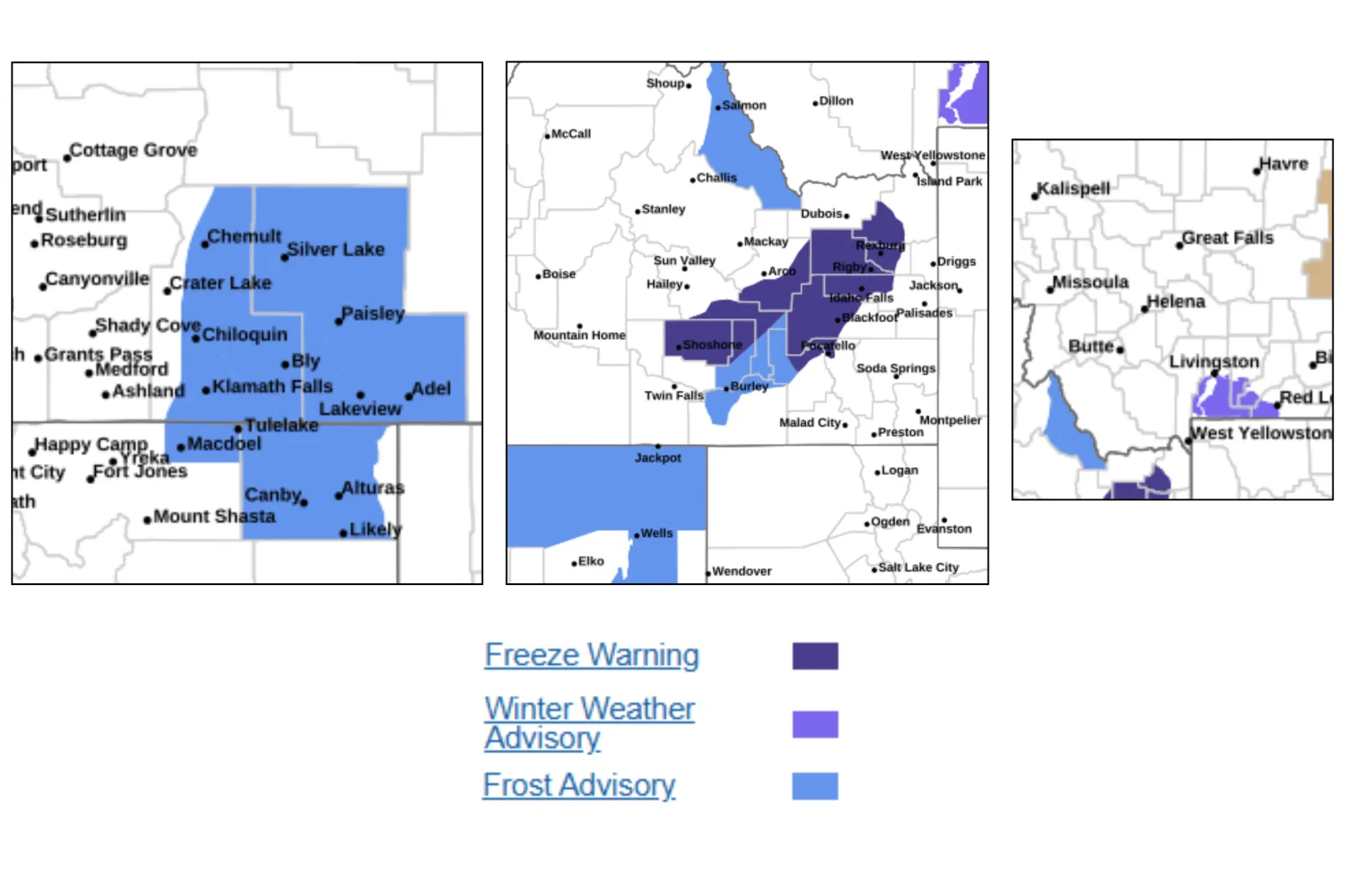
In Montana, a Winter Weather Advisory remains in effect for the Absaroka and Beartooth Mountains through Thursday morning, where light snow and gusty winds up to 35 mph are expected along the Beartooth Highway.
Further south and west, the biggest concern shifts to widespread freezing temperatures and frost:
- Idaho: Frost advisories and freeze warnings are in place for parts of the eastern Magic Valley, Snake River Plain, and surrounding areas, with temperatures expected to drop to between 28 F and 32 F.
- Oregon and northern California: Frost advisories cover the Klamath Basin and Modoc County regions until Thursday morning, where 33 F lows are forecast, with some freezing temperatures likely in colder pockets.
- Nevada: Northern and south central Elko County is also under a frost advisory, with lows between 33 F and 37 F expected.
- Western Montana (Lemhi County): Temperatures could dip as low as 30 F, bringing a risk of frost.
Across these regions, most advisories are set to expire between early morning and mid-morning Thursday, as temperatures gradually warm after sunrise.
Conditions and Impacts
The NWS is warning that frost formation is likely across a wide area, with some locations dropping below freezing for several hours overnight.
These conditions could:
- Kill or damage sensitive crops and outdoor vegetation
- Harm unprotected plants during the early growing season
- Pose a risk to outdoor plumbing in colder pockets
In higher elevations, snow will add to the hazards. Travel through mountain passes such as the Beartooth Highway could be impacted by slippery conditions and reduced visibility, even though it is mid-June.
Why This Is Unusual
The timing of this cold blast stands out.
June typically brings mild to warm overnight temperatures across much of the interior west, particularly in lower-elevation desert and valley regions.
While exact climatological averages vary by location, overnight lows in areas such as southern Idaho, northern Nevada and eastern Oregon are usually well above freezing at this time of year, making June an active season for growing plants and crops.
The Beartooth Highway, which rises above 10,000 feet, is one of the few locations where summer snow is not unheard of, but even there, snow events in June are noteworthy because they can disrupt travel during peak tourist season.
More broadly, widespread frost advisories across multiple western states in June highlight what meteorologists often call cold air outbreaks, where a cool air mass lingers or dips unusually far south.
What Residents Should Do
The NWS is urging residents to take precautions immediately, including:
- Covering or bringing in sensitive plants
- Protecting outdoor irrigation or plumbing systems
- Exercising caution in mountainous travel areas where snow is possible
In plain terms, despite it being June, parts of the west are experiencing a brief return to winter-like conditions overnight, underscoring the region’s volatility during transitional seasons.










Leave a Reply