

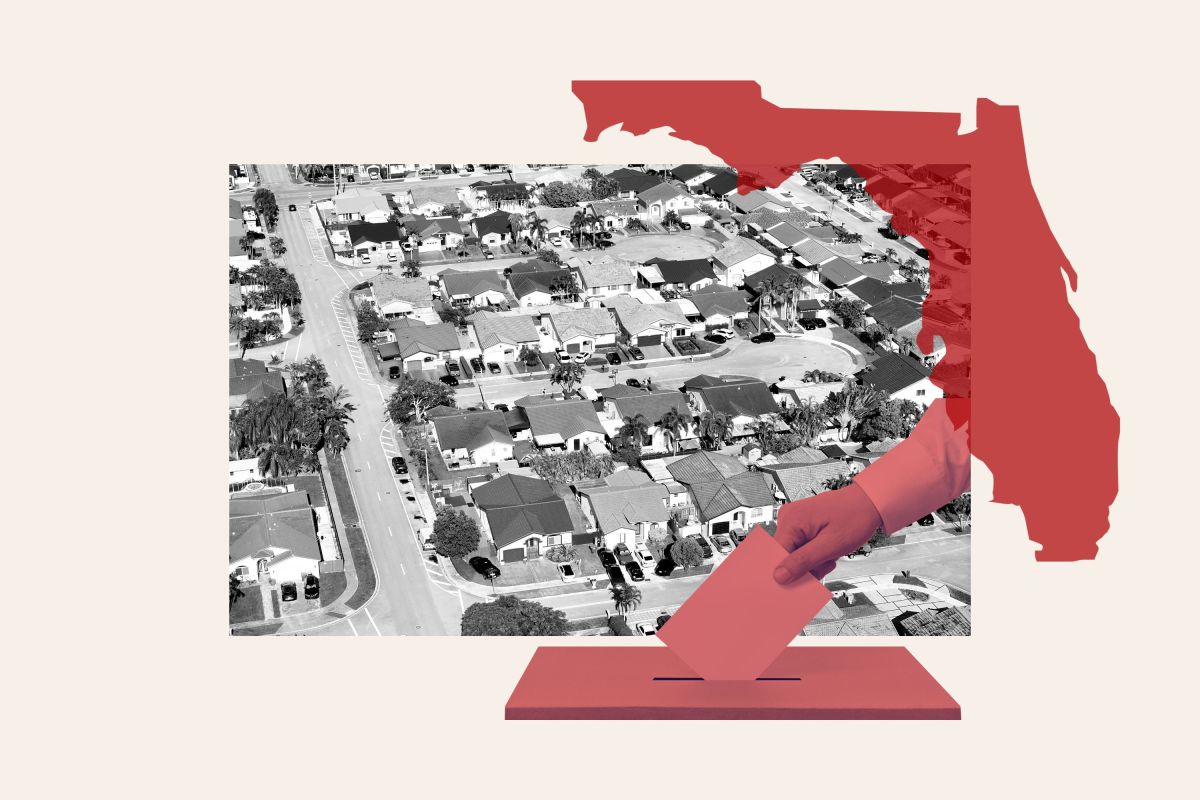
Florida voters will decide in November whether eliminating non-school property taxes for thousands of homeowners in the state is worth the risk of facing a higher sales tax and a potential reduction in public services, as local governments warn the reform could be disastrous for their budgets.
Lawmakers in Tallahassee cleared the way for a historic constitutional amendment earlier this month that would increase the exemption for homestead properties to $150,000 in 2027 and to $250,000 in 2028, effectively reducing many homeowners’ non-school local property taxes to zero.
Pleas for lawmakers to reconsider such large cuts have been pouring in over the past few days even from Republican-controlled municipalities who have previously expressed support for property tax reform, as they now fear the impact that such a drastic reduction would have on their revenues and funding.
While it is difficult to determine, at this point, which public services would be affected by cuts to property taxes and how, a May 29 analysis by the Florida Policy Institute (FPI) has calculated how much each school district and counties would lose in revenues if the amendment was passed.
Miami-Dade, Broward, and Palm Beach Counties school districts would face the biggest loss in revenues under a $250,000 homestead exemption, according to analysts, respectively, at -$512,067,600, -$473,837,333, and -$418,239,500.
These are the same counties which would face the biggest loss in revenues at the general county-level, with an estimated drop in revenues of $460,456,033 in Miami-Dade, $349,937,020 in Broward, and $356,944,400 in Palm Beach if the homestead exemption is increased to $250,000.
Overall, Florida counties would lose an average of $4.8 billion per year under the $250,000 exemption, according to the FPI.
What Is in the Latest Property Tax Reform Proposal?
The proposal, a tweaked version of the one recently made by outgoing Governor Ron DeSantis, was embraced by Florida’s Republican-dominated House and Senate and passed in the form of House Joint Resolution 1F on June 2.
These are its main points, as described in the bill:
- Exempting the first $150,000 of a homestead’s value from taxation for all levies other than school district levies by 2027 and the first $250,000 by 2028, with the goal of completely eliminating property taxes for homestead properties through general law after that;
- Requiring local governments to use any remaining property taxes solely for key public services, including public safety, education and schools, infrastructure, and natural resources.
- Protecting small businesses by limiting future property tax assessments on companies;
- Putting long-term Florida residents first, requiring any person who establishes residency after January 1, 2027, to maintain residency in the state for five years before being able to receive the increased homestead exemption.
The bill does not include the creation of a fund which would provide local governments with state grants to help cover essential services while property taxes are being phased out, as included in DeSantis’ draft.
HJR 1F will be put to voters on November 3 as a yes or no question regarding the adoption of the amendment. It would need a supermajority of 60 percent of voters to back it up to become law. If approved, it would take effect on January 1, 2027.
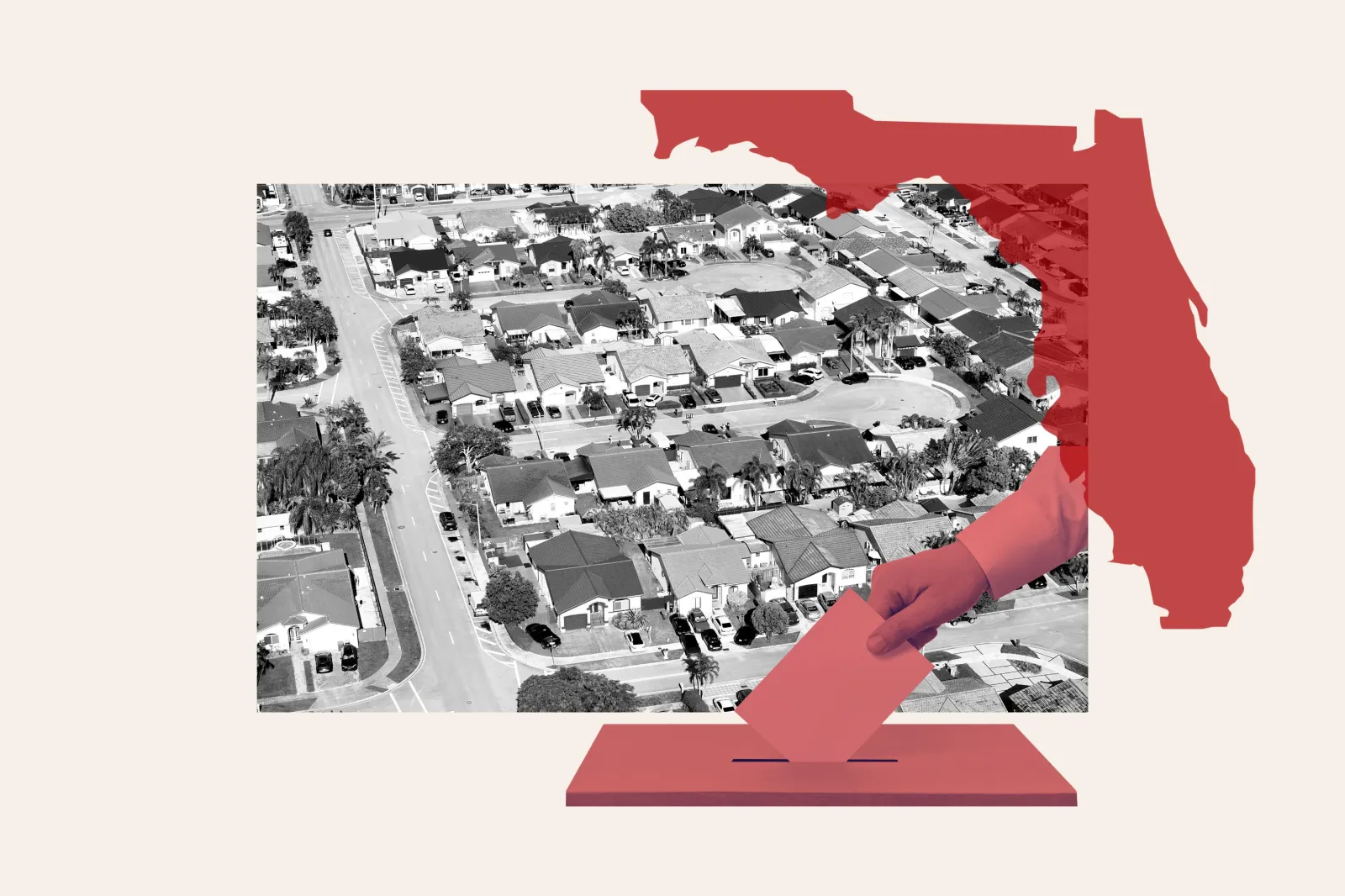
Why Is It Proving So Controversial?
A House staff analysis has estimated that the proposal would cut local non-school governments’ revenues by more than $8.4 billion a year across the state.
This drastic drop in revenues will leave Florida counties, cities, and schools scrambling to continue funding the public services they currently provide, they say, and may force them to increase other forms of taxation.
“When the bill comes due, it won’t be paid by Tallahassee,” Democratic State Senator Lavon Bracy Davis said in a statement reported by News4JAX. “It will be paid by your city, your county, your neighborhood school, your library, your community. This proposal does not eliminate costs, it simply moves them. It is not tax relief, it is a tax shift.”
The office for Jacksonville’s Mayor Donna Deegan, a Democrat, said in a statement that “as it stands now, property tax revenue barely covers Jacksonville’s police and fire costs. Eliminating or dramatically changing this funding source will hurt public safety efforts, as well as core services that improve quality of life and affordability.”
Even GOP Raising Concerns
While backlash from Democrat leaders was to be expected, voices of concerns have been raised among Republicans in the state too.
Boca Raton Chief Financial Officer Jim Zervis has warned that the city could lose about $8 million in 2027 and about $16.7 million in 2028 if the amendment is approved.
In Windermere, in Orange County, Republican Mayor Andy Williams expressed his support for property tax reforms while calling for more clarity on how local governments are expected to keep paying for essential services.
“We’re all for tax reform. We absolutely do need tax reform. It just needs to be sustainable,” said Williams earlier this week, as quoted by ClickOrlando. “In this bill, they discuss core services that will be protected, but what are those core services? There’s not a definition for this. In our town we pretty much have everything as a core service.”
In a letter signed by Windermere leaders, town officials argue that the costs of providing local government services will not “disappear if property taxes are reduced or eliminated. Essential services must still be funded, employees must still be paid, infrastructure must still be maintained, and public safety responsibilities must still be met.”
‘What Are We Afraid Of?’
Some local leaders, on the other hand, have been supportive of the proposal, saying that it will be up to voters to decide the way forward.
“What are we afraid of? That we pass this and the voters actually get a choice?” said Republican State Senator Jonathan Martin in a statement reported by News4JAX. “If they want lower taxes, they can vote yes; if they don’t want lower taxes, they can vote no.”
“Over the past several years, local governments have been the beneficiary of the days of milk and honey,” Crestview Republican Senator Don Gaetz said, echoing DeSantis’ rhetoric that higher property taxes are to be traced back to inflated local governments’ budgets.
“They have gotten extraordinary increases in the amount of money they have available to spend, and they spent it.”








Leave a Reply