


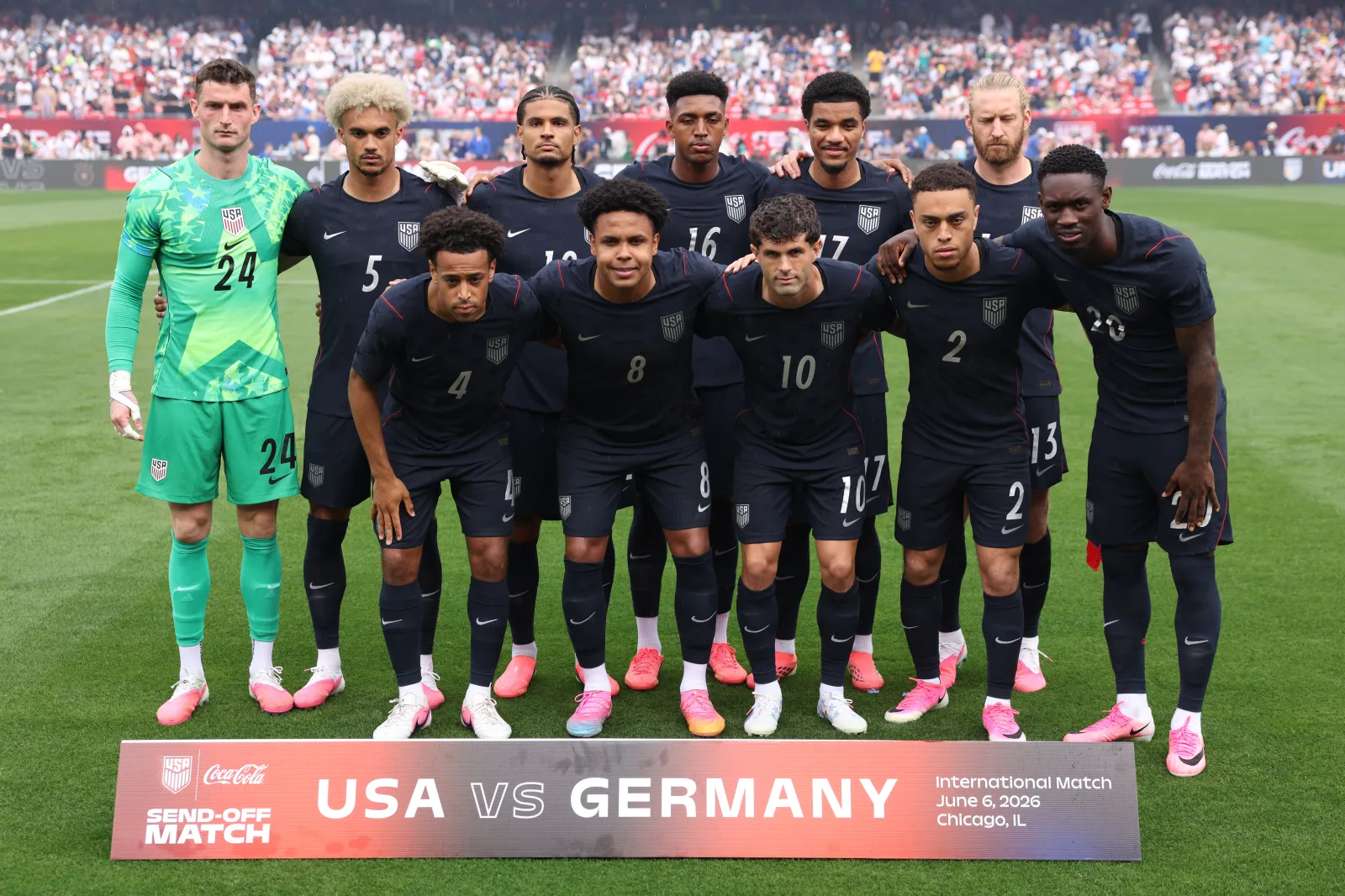
A group of domestic manufacturers is calling out Nike for producing the United States men’s national team’s World Cup jerseys in Thailand, saying the iconic American brand had the capacity to make them at home and chose not to.
The Alliance for American Manufacturing (AAM), a nonprofit partnership between domestic manufacturers and the United Steelworkers union, made the criticism in a June 2 post, days before the team’s opening match against Paraguay at SoFi Stadium in Los Angeles on Friday.
“You’ve got American athletes, wearing the American flag, in uniforms made somewhere else. That disconnect matters more than people think,” Jennifer Snyder of the AAM wrote in the post.

The AAM said Nike has American production facilities in its supply chain and did not use them for the kits and that American companies already make high-performance gear for the military, first responders and professional athletes.
“Nike didn’t have to offshore these kits,” Snyder wrote. “It chose to.”
The group also argued that domestic production would have shielded the company from the tariffs that have hammered Nike and other American manufacturers since President Donald Trump began imposing duties on imports from Asia in 2025, driving up costs across the industry.
Newsweek reached out to Nike for comment on Thursday.
Trump, Tariffs and the America First Agenda
The jersey label sits at the center of a trade debate that has reshaped the American economy over the past 14 months.
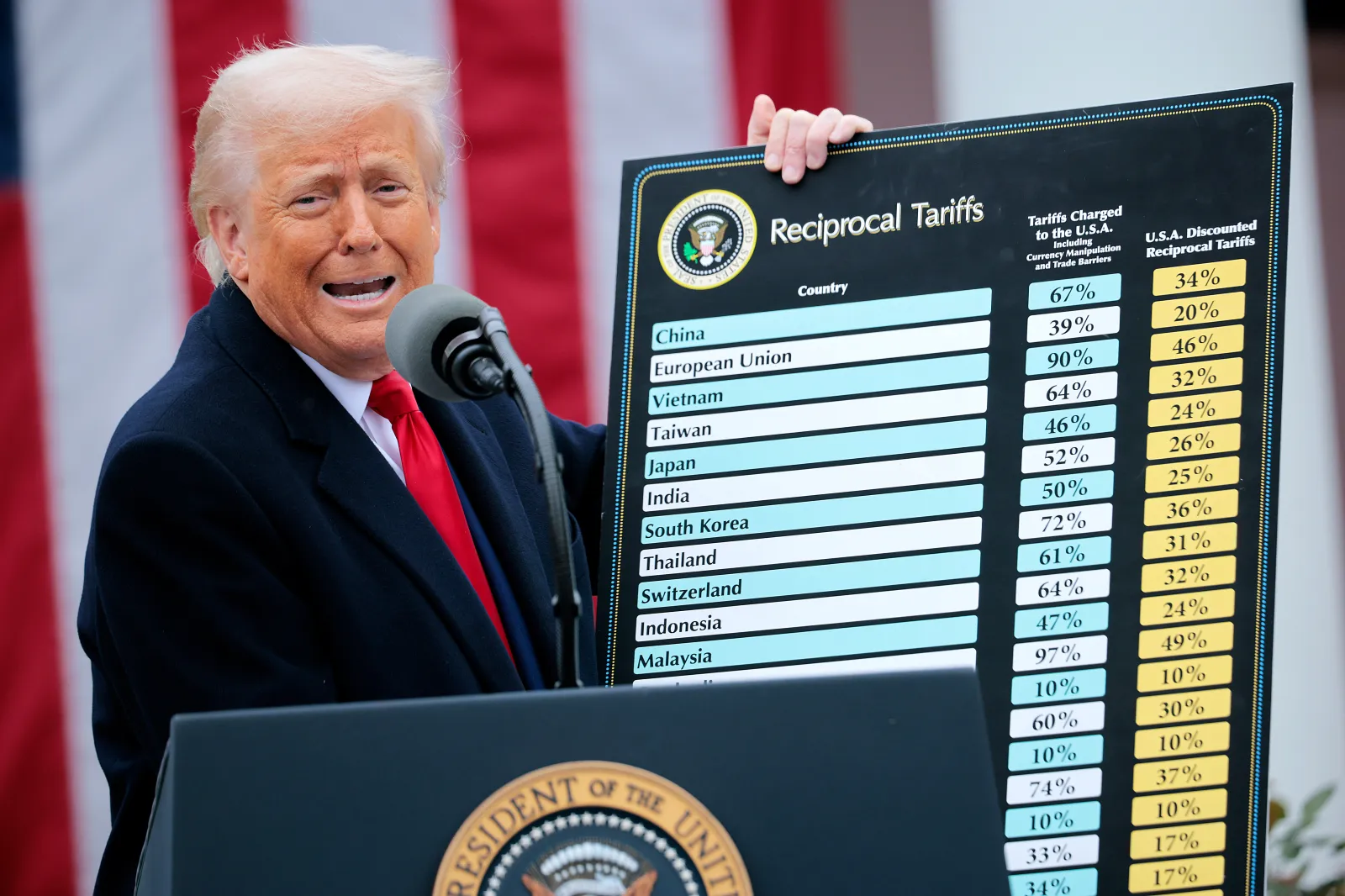
On April 2, 2025, Trump stood in the White House Rose Garden and declared the day “Liberation Day,” announcing sweeping tariffs on imports from more than 180 countries. “April 2, 2025, will forever be remembered as the day American industry was reborn, the day America’s destiny was reclaimed and the day that we began to make America wealthy again,” he said.
The stated goal was to end American dependence on foreign manufacturing. On his first day in office, Trump issued a memorandum titled “America First Trade Policy,” declaring that “Americans benefit from and deserve an America First trade policy” that “benefits American workers, manufacturers, farmers, ranchers, entrepreneurs, and businesses.”
“Jobs and factories will come roaring back into our country, and you see it happening already,” Trump said during the speech.
The evidence on that promise has been mixed. From April 2025 to February 2026, the U.S. lost 89,000 manufacturing jobs, according to an analysis of Bureau of Labor Statistics data, averaging about 9,000 per month since Liberation Day.
The administration has pushed back on that framing. The White House said in April that the manufacturing sector recorded its first positive manufacturing job growth in three years at the close of the first quarter of 2026, calling it “the largest reshoring wave in American history.”
The tariff landscape has shifted considerably since Trump’s initial announcement last April. The Supreme Court struck down the administration’s sweeping import duties in February, ruling they exceeded presidential authority. Thailand and Vietnam, the two countries most central to Nike’s supply chain, have since negotiated framework agreements with the administration, bringing both countries’ reciprocal tariff rates to 19 and 20 percent, respectively.
How the Supply Chain Works
A Team USA jersey is not made in one place. It moves through a production network spread across Asia before it reaches a stadium or a store shelf.
Nike’s model is built on what the company calls multi-sourcing, spreading manufacturing across several countries to reduce risk and keep costs down. Fabrics are processed, dyed, cut, sewn and finished at different stages of an international supply chain. The finished kits are then shipped to the United States, a journey that typically takes 30 to 45 days by sea freight from Southeast Asia.
The scale of that network is vast. Nike worked with 664 supplier factories in 35 countries as of April 2025, employing about 1.26 million people. Vietnam hosts roughly 25 percent of those factories, and China 24 percent. The U.S. accounts for about 4 percent.
Performance apparel, such as a World Cup kit, deepens the dependence. The polyester knits, sublimation printing and technical finishing that modern jerseys require are concentrated in Asian industrial clusters, where fabric mills sit alongside the factories that cut and sew.
Labor completes the equation. Wages in Thailand and Vietnam are a fraction of American garment wages, and analysts estimate comparable performance apparel costs several times more to produce in the United States.
How Tariffs Have Hit Nike
The cost of the trade war is documented in Nike’s own filings.
The company had paid approximately $ 1 billion in tariffs imposed under the International Emergency Economic Powers Act by the time of its most recent quarterly report and said that the availability of any refunds following the Supreme Court’s February ruling remains highly uncertain.
The bill grew as the year went on. Nike initially projected $ 1 billion in additional tariff costs for fiscal 2026, then raised the estimate to $ 1.5 billion in September after new reciprocal rates took effect, according to chief financial officer Matthew Friend.
The pressure showed up in the company’s most recent results. In the third quarter of fiscal 2026, reported March 31, Nike’s gross margin fell 130 basis points to 40.2 percent, with tariffs in North America accounting for 300 basis points of that pressure, according to the company’s filing. Net income dropped 35 percent from the prior year to $520 million.
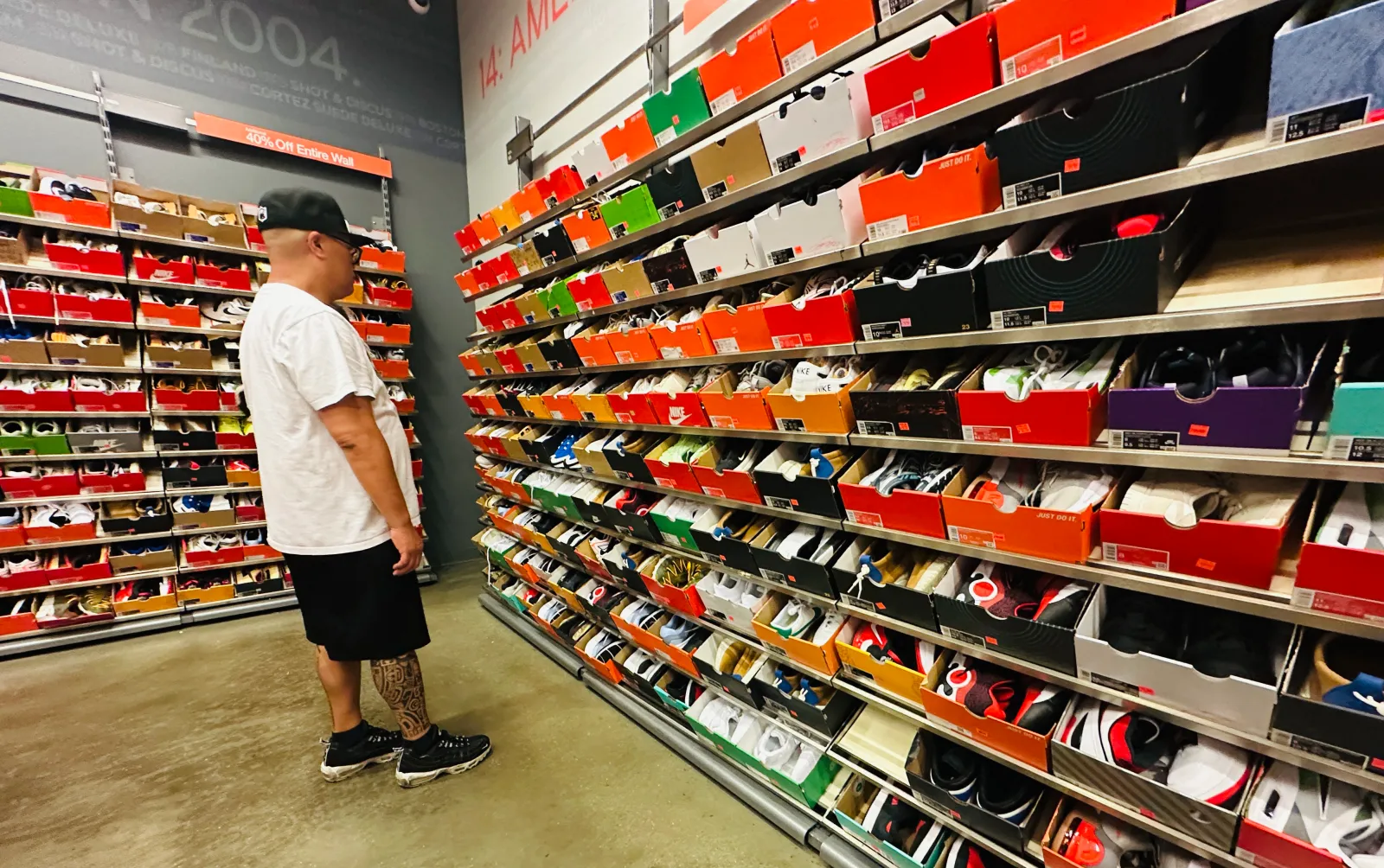
Consumers have absorbed part of the cost. Nike began what Friend called a “surgical price increase” in the United States in the fall of 2025, part of a four-part plan that also included shifting sourcing among countries and pressing suppliers to share the burden.
The squeeze extends across the industry. Shoe prices jumped 5.2 percent in May, the sharpest monthly advance in nearly four years, according to the Footwear Distributors and Retailers of America. Year-to-date footwear prices are up 3 percent, on pace for the third-fastest annual increase in 34 years.
“Price pressure would continue to permeate the footwear supply chain to store shelves and into less confident footwear shoppers’ pockets in 2026,” Gary Raines, the group’s chief economist, told Footwear News.
Friend told investors on the March 31 earnings call that the tariff headwind would persist through the first quarter of fiscal 2027, with gross margin expansion expected to begin in the second quarter of that fiscal year.
What the tariffs have not done, so far, is move production to the United States. Nike’s response to the duties has been to redistribute manufacturing among Vietnam, Indonesia and other Asian countries.
What It Would Take
The Alliance for American Manufacturing argues the capability still exists. The group pointed to OT Sports, headquartered in Burlington, North Carolina, which designs, cuts, prints and sews every garment in its 40,000-square-foot facility and supplies more than 400 minor league professional and collegiate teams. Aero Tech Designs of Pittsburgh has made performance cycling apparel domestically since the 1980s.
But neither company operates at anything close to Nike’s scale. Nike generated more than 46 billion dollars in revenue in fiscal 2025 and outfits national teams across the globe. Shifting even one product line to domestic production would require rebuilding supply relationships, retraining workers and absorbing higher per-unit costs—expenses the company has given no indication it intends to take on.
“American athletes deserve uniforms worthy of the country they represent,” Snyder wrote. “American manufacturers have shown they can do the job. The next move belongs to Nike.”




Leave a Reply