

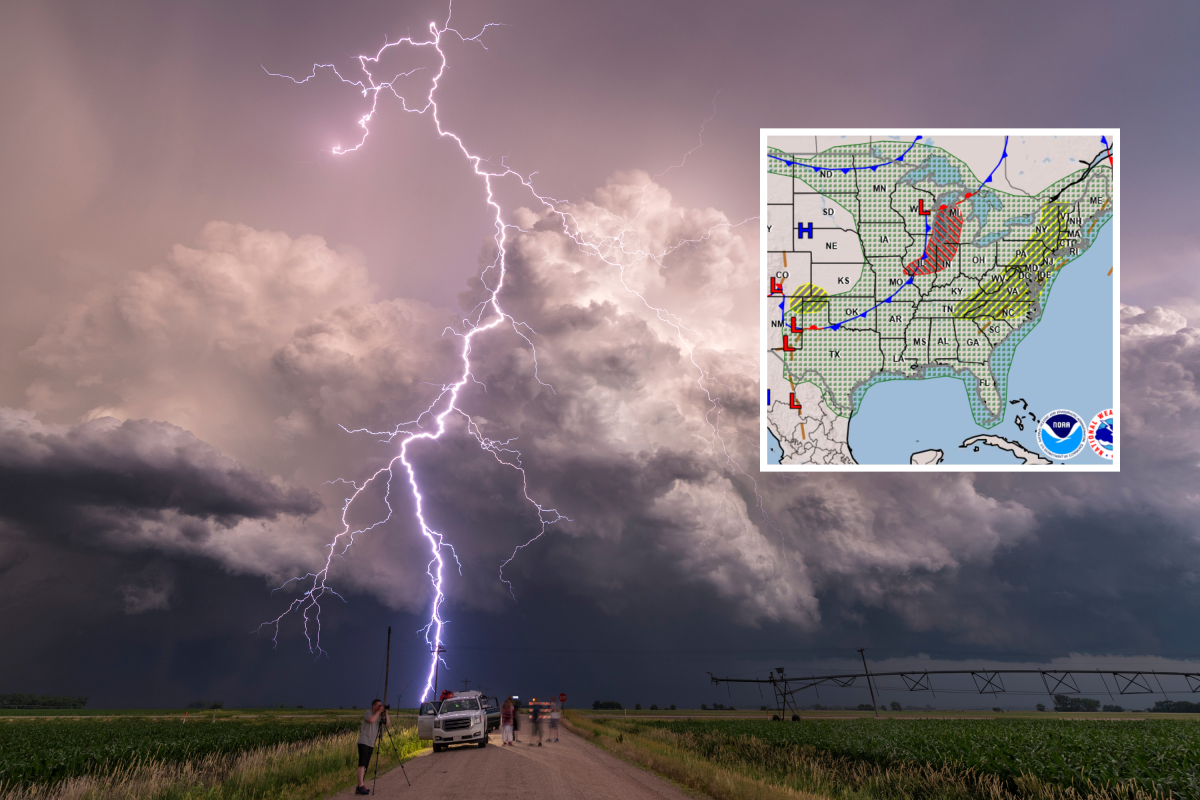
Severe storms and tornadoes are disrupting travel across the United States just as millions of soccer fans begin moving between host cities for the 2026 FIFA World Cup, creating delays at some of the country’s busiest airports.
Chicago has been at the center of the disruption. Thunderstorms forced ground stops at O’Hare and Midway airports, leading to more than 1,000 delayed or canceled flights at the height of the chaos, according to flight-tracking data.
As the storm system pushed east, delays and cancellations spread to major hubs including New York, Newark and Philadelphia, creating ripple effects across the national air travel network.
By 2:30 a.m. ET, FlightAware data showed 599 flights had already been canceled nationwide.
And on June 11, at one point, there were 925 flight cancellations, underscoring the scale of the weather-related disruption.
The Federal Aviation Administration had warned that thunderstorms could reduce airport capacity across several major hubs, allowing delays to cascade throughout the wider network rather than remain isolated to one region.
World Cup Travel Hit
The timing is particularly significant because the 2026 FIFA World Cup officially began on June 11 across the United States, Canada and Mexico.
Although matches have not been directly affected, the storms are already straining the transportation network relied upon by fans traveling between tournament venues.
Major carriers, including United Airlines, have issued weather-related travel waivers, while delays on routes serving host cities such as New York, Philadelphia and Boston threaten to disrupt travel plans for domestic and international visitors.
AccuWeather forecasters have also warned that thunderstorms could eventually affect matches themselves, as lightning detected near stadiums can trigger temporary suspensions under tournament safety rules.
The disruption has extended beyond air travel. Crowded scenes at New York’s Penn Station highlighted broader transportation challenges as rail delays and cancellations added pressure to routes connecting several World Cup host cities.

Tornado Damage Captured in Dramatic Videos
Videos shared online captured extensive damage after tornadoes swept through parts of northern Illinois and northwestern Indiana, leaving flattened homes, destroyed roofs and debris-strewn neighborhoods.
Footage from Streator, Illinois, shows emergency crews searching through wreckage after a tornado tore through the eastern part of the city, reducing sections of residential neighborhoods to rubble.
One widely shared video shows rescuers pulling a man alive from the debris of a collapsed home, illustrating both the intensity of the storms and the urgency of recovery efforts.
In northern Indiana, footage recorded roughly 40 minutes southeast of Chicago shows a large funnel cloud moving rapidly across open terrain, threatening power infrastructure and nearby structures.
Storm chasers in north-central Illinois described conditions as relentless, reporting multiple tornado touchdowns within a short period.
Additional images showed roofs ripped from buildings, uprooted trees and debris-covered roads, highlighting the widespread impact across the region.
Tornadoes and Power Outages Compound Disruption
There has been a broader severe weather outbreak across the Midwest, where multiple tornadoes have damaged homes, downed power lines and disrupted local infrastructure.
Hundreds of thousands of homes and businesses lost power as storms damaged electrical infrastructure and blocked roads with fallen trees and debris.
For travelers, the combination of flight cancellations, power outages and transportation disruptions has made reaching major airports increasingly difficult.
More Storms—and Heat—Could Be on the Way
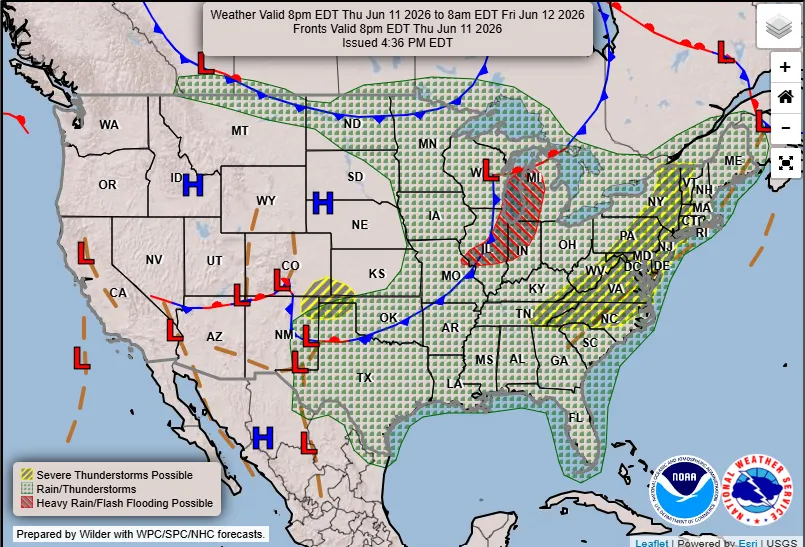
Forecasters warn the disruption may not be over yet, with the storm system expected to continue moving into the densely populated Northeast corridor.
The NWS’s Weather Prediction Center said stormy conditions are expected to become more widespread across the Northeast and Mid-Atlantic as a cold front advances eastward, bringing the risk of severe wind gusts.
Behind the storms, NWS forecasters expect a wave of heat and humidity to spread across much of the East Coast, with heat index values approaching 100 degrees Fahrenheit (38 degrees Celsius) in some locations.
The combination of severe weather and extreme heat could place additional strain on transportation systems at a time when travel demand is already elevated by the World Cup, potentially extending delays in the days ahead.








Leave a Reply