

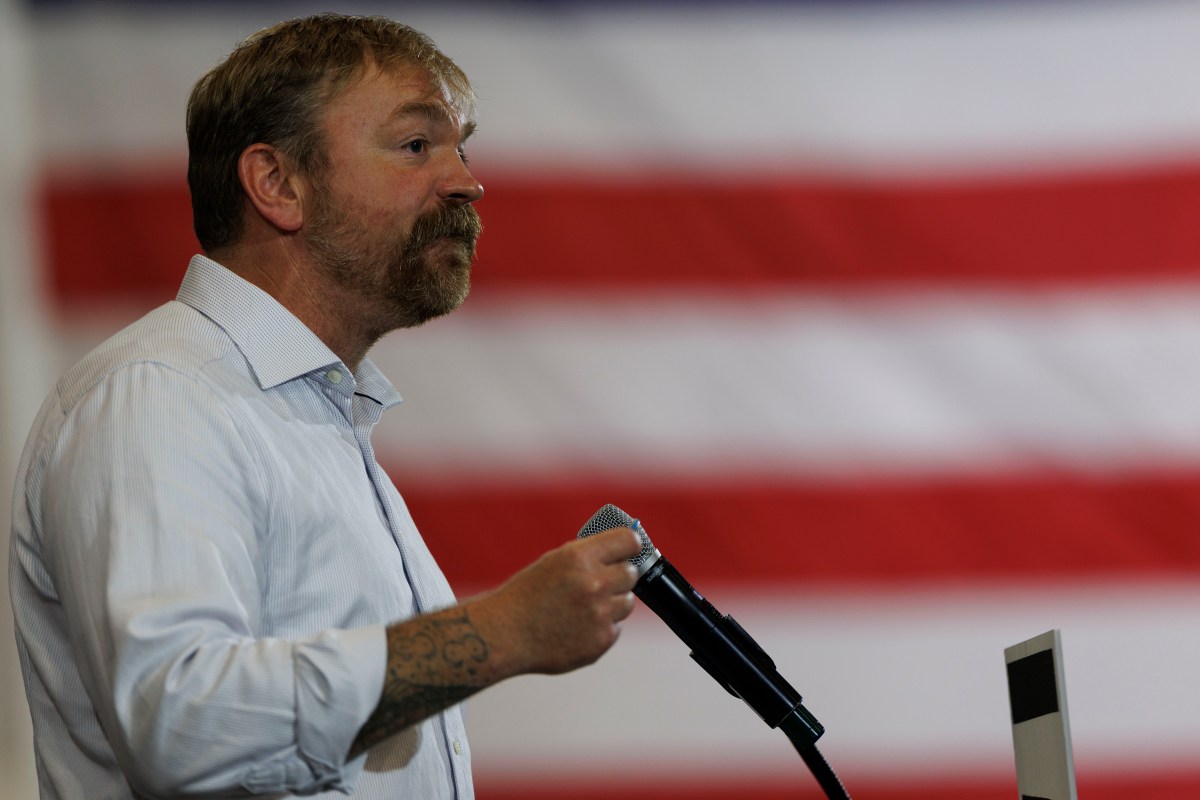
Graham Platner is on track to win more votes than any Democratic Senate candidate in Maine history in his challenge to take on GOP Senator Susan Collins, securing a major primary victory despite concerns from some Democrats that a series of scandals threatened to weaken his standing among Maine voters.
Democrats view Maine’s Senate race as a top opportunity to flip a Senate seat in the 2026 midterm elections despite Collins’ previous victories in the Pine Tree State. Maine generally leans toward Democrats, with former Vice President Kamala Harris winning it by nearly 7 points in 2024—and 2026 is likely to be a more favorable environment for Democrats.
But it’s unlikely to be an easy lift for Democrats. Collins has won in tough environments before due to her personal popularity and bipartisan credentials. Republicans, meanwhile, seized on Platner’s scandals to attack the Democratic nominee, and some polls indicated a tightening race in the days leading up to the primary. He is now tasked with winning over skeptical Democrats who may have voted for Collins in the past, ahead of the November general election.
Newsweek reached out to the Platner and Collins campaign for comment via email.
A Record-Breaking Primary Win
Platner has won more than 130,000 votes, accounting for nearly 72 percent of the vote, against Governor Janet Mills and David Costello as of Wednesday morning, reported The New York Times. That sets a new record for a Maine Democratic Senate candidate in a primary.
Previously, that was held by Sara Gideon, the Democratic nominee against Collins in 2020. She won her primary with 116,264 votes—or about 71.4 percent of the vote, according to data from the Maine Secretary of State office.
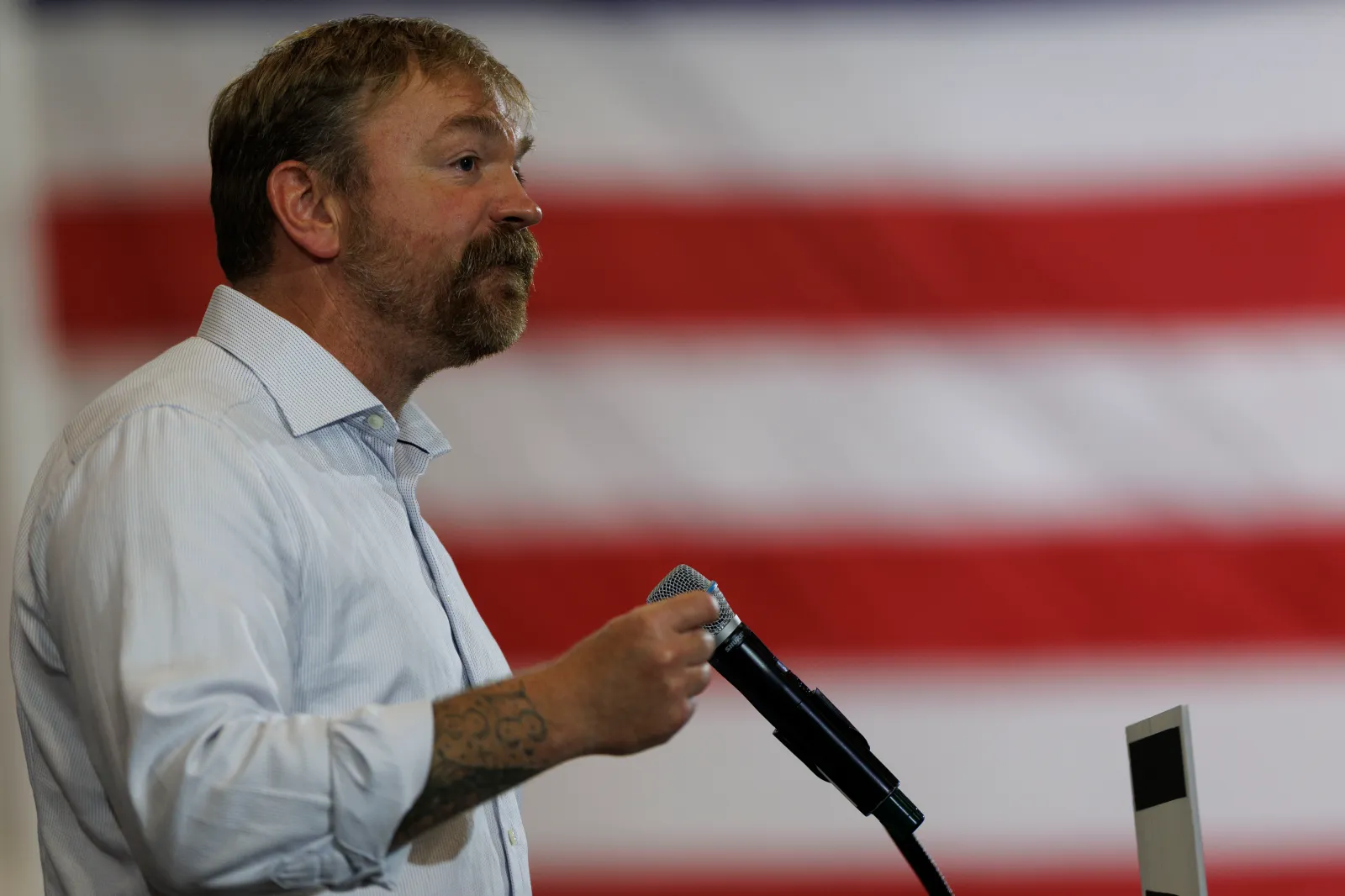
While Gideon may end up with a higher vote share depending on the remaining ballots, Platner did set a new record for votes received in a Democratic primary.
Other candidates haven’t come particularly close to Platner and Gideon—Collins’ challengers ran unopposed in the primaries in 2002 and 2014. In 2008, Democrat Tom Allen won the Senate primary with 69,772 votes.
Maine’s other Senate seat is held by Senator Angus King, an independent who caucuses with Democrats. There have still been Democratic primaries, but turnout has been low with most in the party opting to support King’s reelection.
Platner’s Polling Compared to Gideon in 2020
Platner starts the general election in a stronger position than Gideon did six years earlier, according to polls.
The latest poll from Tavern Research, which surveyed 1,642 adults from June 5-8, showed Platner up 2 points on 51 percent, compared to Collins’ 49 percent. A Fabrizio, Lee & Associates poll, which surveyed 800 likely voters from June 1-3, showed Collins and Platner tied at 46 percent.
Earlier polls gave Platner a more sizable advantage.
A Public Policy Polling survey showed Platner up four points on 49 percent, while Collins received 45 percent. It surveyed 670 registered voters from June 2-3.
A University of New Hampshire poll, which surveyed 1,250 likely voters from May 21-25, showed Platner up nine points, at 51 percent, to Collins’ 42 percent.
Meanwhile, a Pan Atlantic SMS Group poll, which surveyed 827 likely voters from May 8-18, showed Platner with 48 percent and Collins with 41 percent.
In 2020, some early polls showed Collins up, but by July, Gideon established a polling lead and would go on to lead every poll before Election Day. Polls were generally within the margin of error, and most did not show her reaching 50 percent support, a key metric in Maine because of its use of ranked-choice voting.
In July 2020, a Public Policy Polling survey gave Gideon a 4-point lead with 46 percent to 42 percent. It surveyed 1,022 Maine voters from July 2-3, 2020. A Data for Progress poll showed Gideon up with 44 percent compared to Collins’ 43 percent. It surveyed 866 Maine voters from July 24 to August 2.
Collins 2020 Victory
Despite Gideon’s polling lead, Collins ended up winning reelection with about 51 percent, compared to Gideon’s 42 percent.
Progressive independent Lisa Savage received 5 percent of the vote, while a more conservative independent, Max Linn, received less than 2 percent. Democrats believe the race may have been closer had ranked-choice voting been in place, but that proved irrelevant, as Collins won an outright majority.
Maine is generally seen as a more difficult state to poll because of its independent electorate and large rural population, in addition to its use of ranked-choice voting.
Platner’s Fundraising in Maine
Platner has raised more than $16 million since launching his campaign, and had more than $2 million in the bank as of May 20, according to a filing with the Federal Election Commission (FEC). Collins, meanwhile, reported nearly $11 million in contributions and still had more than $9.6 million on hand in her pre-primary filing.
His fundraising is not as high as Gideon’s in 2020. In 2020, Collins reported total contributions of more than $15 million and $5 million on hand in her pre-primary filing. Gideon, at the same time, had reported more than $22 million in total contributions and had more than $5 million on hand.
As of April 2026, Gideon still had nearly $2.7 million in the bank, according to an FEC filing. She has slowly spent those funds over the years, but how she plans to use that money in the future still remains unclear.
National Headwinds Could Boost Platner in Maine
Platner could benefit from a “blue wave” fueled by President Donald Trump’s declining approval rating. Midterms are seen as a referendum on the sitting president, so the Trump administration’s unpopularity will be a challenge for Collins amid concerns about the cost of living and high gas prices amid the war in Iran.
Collins, a moderate, has distanced herself from Trump over the years, but Platner and Democrats are likely to connect her to more conservative Republicans. He tested that message during his victory speech on Tuesday.
“Susan Collins may have started her career decades ago in Washington with good intentions, but she has become just as spineless and corrupt as the establishment she now serves,” he said. “She got elected promising to elect Roe v. Wade, only to turn around and put a justice to the Supreme Court who overturned it. She lied to us.”
Trump has never been particularly popular in Maine. He lost the state by 7 points in 2024, 9 points in 2020 and 3 points in 2016. While he has made inroads in the rural, northern part of the state, cities like Portland and the more liberal southern region have powered Democratic victories in the Pine Tree State.
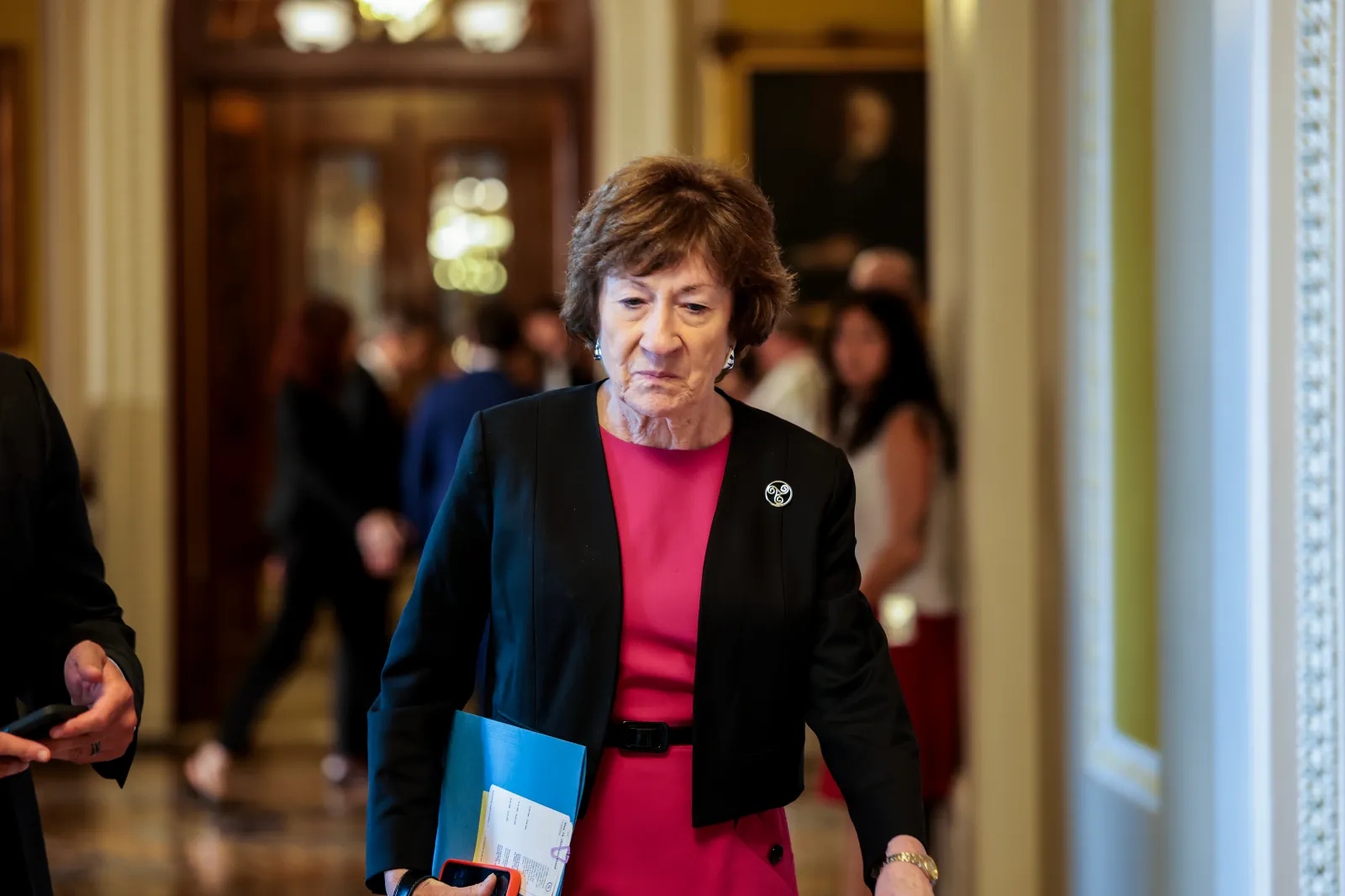
Collins has managed to win in the past due to her own personal popularity. She is unique in the Senate as the only Republican representing a state that routinely votes for Democrats in presidential races. There are no longer any Democrats representing states that routinely support Republicans on the presidential level after West Virginia Senator Joe Manchin’s retirement and Jon Tester’s loss in Montana in the 2024 election cycle.
Her vote to confirm Supreme Court Justice Brett Kavanaugh took a toll on her approval rating, which fell from +21 points in the first quarter of 2018 to -12 points by the fourth quarter of 2019, according to Morning Consult polling.
Platner Scandals Explained
Platner drew scrutiny after The New York Times made allegations about his behavior in past romantic relationships.
One former girlfriend of Platner’s, Lyndsey Fifield, a conservative who has worked for Republican campaigns, alleged that Platner had engaged in physically threatening behavior during their relationship over a decade ago. She alleged that Platner twisted her arm behind her back during an argument, shoved her into a bedroom and blocked her from exiting.
Fifield told the outlet that Platner “never hit me, he never punched me.” The Times said it could not independently corroborate the incidents alleged by Fifield.
Platner has strongly denied those accusations, saying allegations involving physicality are “simply not true” and describing them as politically motivated.
The Times interviewed six of his former girlfriends, three of whom said they support his candidacy.
Days earlier, The Wall Street Journal reported that Platner’s wife, Amy Gertner, reportedly informed Platner campaign aides during an internal vetting exercise in August that he had sent sexually explicit text messages to several women. The disclosure was intended to ensure the information did not catch the campaign off guard.
Genevieve McDonald, former state legislator and Platner campaign political director until October, who had been cited as bringing the information forward, previously told Newsweek: “I can confirm the details of what has been reported and what Graham Platner’s campaign has already admitted to on the record, that he was sexting multiple women while married and that the campaign tried to assess that as an election vulnerability when his wife brought it to the campaign’s attention.”
Platner has dismissed the reports as “gossip” and has acknowledged strains in his marriage, though he framed them as resolved.
“Amy and I went through something hard—because of me. We did the work, and I’m grateful for her every hour of every day,” he said in a written statement released Sunday.
Gertner said in a video posted by Platner’s campaign late Saturday that they have a “great marriage” and that “being married is hard.”
Platner earlier faced controversy over the revelation that he had a tattoo resembling the Totenkopf, or “death’s head,” a symbol adopted by the Nazi SS. He has apologized and previously told Newsweek: “I absolutely would not have gone through life having this on my chest if I knew that—and to insinuate that I did is disgusting. I am already planning to get this removed.”
Past Reddit posts have also drawn scrutiny. In one, Platner said he “became older and became a communist.” In another, in response to a person who posted that white people “aren’t as racist or stupid as Trump thinks,” he replied: “Living in white rural America, I’m afraid to tell you they actually are.”
He told Politico last year: “I made dumb jokes and picked fights. But of course I’m not a socialist. I’m a small business owner, a Marine Corps veteran and a retired s*** poster.”
Maine election law provides a mechanism for replacing a general-election nominee after the primary. Under Title 21-A, §374-A, a political party may name a new candidate if its nominee withdraws by 5 p.m. on the second Monday in July, which falls on July 13 in 2026.
If that happens, the party then has until 5 p.m. on July 27 to select a replacement nominee. The process is handled internally by the party. Platner, however, has not signaled any interest in withdrawing despite concern about his candidacy from some Democrats.
Republicans Issue Warning About Maine Senate Race
The National Republican Senatorial Committee, in a memo reported by Fox News, warned it would be a “fatal mistake to assume Platner is too damaged to win.”
“He is currently leading. Vice President Harris won the state by 7 points, and the National Democrats view this as their only path to regaining control. Senator Collins has won tough races before and can win this one, but only if we meet this moment with total urgency,” the memo reads.
Platner Emphasizes Change in Victory Speech
In his victory speech, Platner emphasized that he has changed since those earlier actions, while pledging to earn the trust of disappointed Mainers.
“If you believe, as I do, that we can change our politics and change our country, then you must also believe that people can change. And the reason I believe that is because I have lived it,” he said.









Leave a Reply