

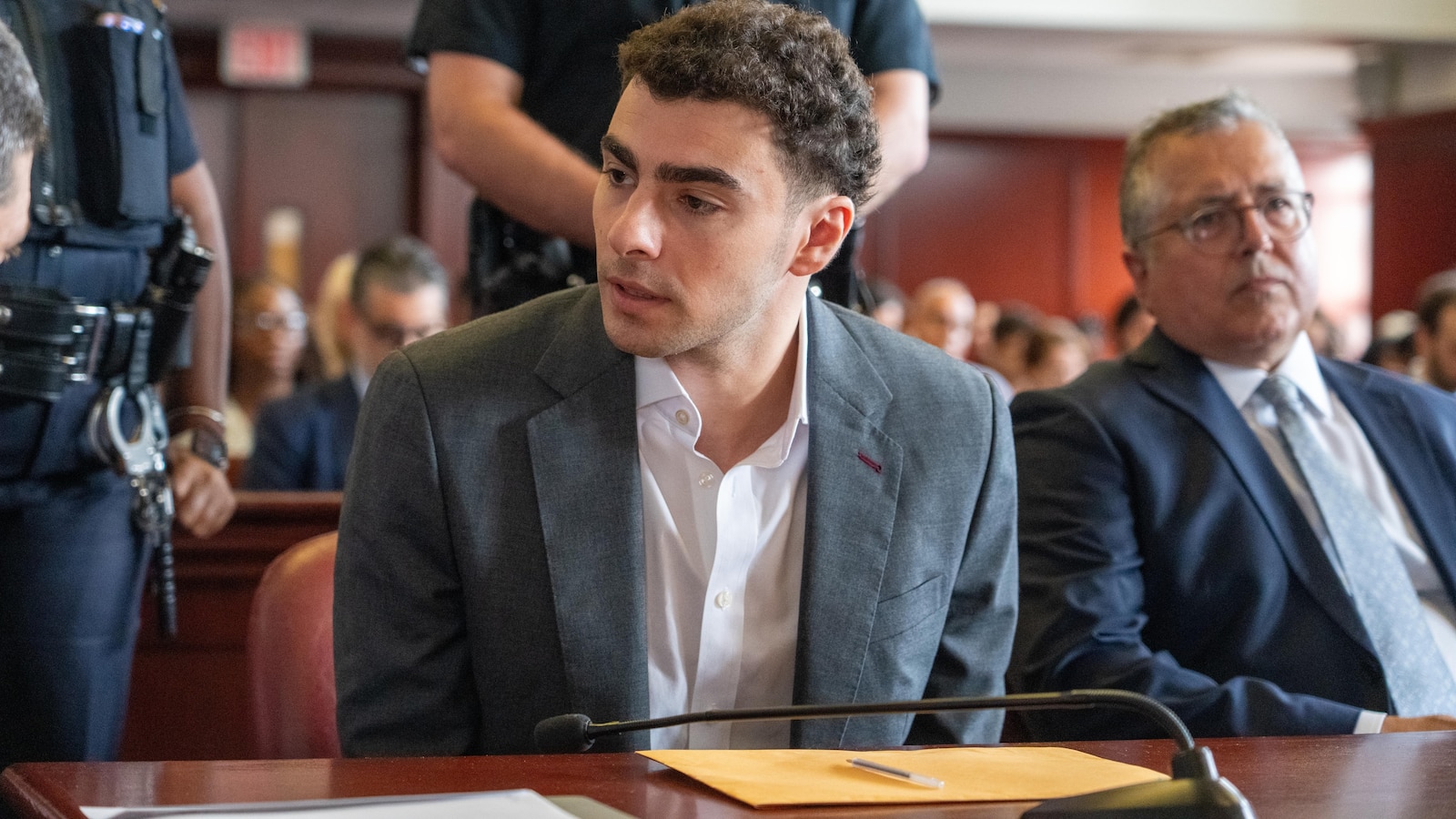
NEW YORK — Luigi Mangione’s guilty plea on Friday to federal stalking-to-kill charges raised immediate questions about why he decided to enter that plea, how it’ll affect his parallel state murder case and what his lawyers might do to prevent Mangione from spending the rest of his life in prison.
In a stunning turn, Mangione pleaded guilty in Manhattan federal court to a pair of stalking charges and admitted that he targeted and killed UnitedHealthcare CEO Brian Thompson as the executive walked to his company’s investor conference at a Manhattan hotel in 2024.
Neither Mangione nor his lawyers said why he pleaded guilty now, but they gave some clues.
Immediately after his plea, Mangione’s lawyers filed paperwork seeking to have the state case thrown out on double jeopardy grounds. That trial is scheduled to begin next month, but could be pushed back or canceled altogether depending on what the judge decides.
If it succeeds, Mangione’s defense team could concentrate on trying to convince the judge in his federal case, Margaret Garnett, to spare him from the life sentence that prosecutors say they intend to seek when he’s sentenced on Dec. 18.
In their double jeopardy filing Friday, Mangione’s lawyers described him as a “pawn in parallel prosecutions,” and defense lawyer Karen Friedman Agnifilo accused state and federal prosecutors of “trying to punish him twice for the exact conduct.”
Indeed, Mangione remains scheduled to go to trial on state murder charges beginning Sept. 8. His federal trial — now moot because of his guilty plea — was set for January.
Complicating matters, anything said in federal court — including Mangione’s statements Friday admitting to killing Thompson — potentially could be used against him in state court, or vice versa.
But that’s not all. Prosecutors say they have a trove of evidence that proves Mangione’s guilt, including: Video of him shooting Thompson and tailing him the day before; Mangione’s DNA and fingerprints on items at or near the crime scene; testimony from shooting witnesses; a 3D-printed 9mm pistol that police found in his backpack when he was arrested that authorities said matched the gun used to kill Thompson; and a notebook found with Mangione at the time of his arrest in which he expressed a willingness to kill a healthcare executive.
The defense previously argued all the items in Mangione’s backpack were obtained in an unconstitutional search, but judges in both the federal and state cases disagreed.
Mangione’s guilty plea, just three weeks before jury selection in his state murder trial, appeared to be part of a larger defense strategy to swiftly resolve both cases, minimize his legal consequences and, perhaps, give him a chance to live some of his life outside a prison cell. Earlier plea talks broke down in June.
Within minutes of his plea, Mangione’s lawyers petitioned the judge in the state case, Gregory Carro, to throw out those charges on double jeopardy grounds. Instead of two trials — and two potential sentences that could run back-to-back — they are fighting for just one and are sure to argue he deserves a far lesser sentence than life in prison.
Manhattan District Attorney Alvin Bragg’s office, which is prosecuting the state case, will have a chance to respond to the defense’s double jeopardy motion before Carro rules. In a statement, the office said it would fight efforts to terminate the state case, in part because Mangione’s sentence in the federal case isn’t yet known. Thompson’s family members, in a statement, suggested they are also looking forward to the state case going to trial. Mangione has pleaded not guilty in the state case.
Compared with federal law and that of other states, New York has uncommonly strong protections for defendants facing multiple prosecutions — though they are not guaranteed.
Bragg’s office contends that the state charges, including murder and firearms offenses, involve different legal elements and criminal conduct than federal charges, which alleged Mangione traveled across state lines to stalk and kill Thompson.
However Carro rules, his decision will be subject to appeal, meaning a final answer on whether Mangione faces a state trial could take a while.
Mangione’s lawyers previously fended off the government’s attempts to seek the death penalty. Now they’re fighting for a sentence that’s less than the life term U.S. Attorney Jamie McDonald said federal prosecutors intend to seek. Life is also the maximum punishment in Mangione’s state case.
Unlike other defendants, Mangione doesn’t have a plea deal with prosecutors. There were “no accommodations or concessions, and we are free to seek the maximum penalty under the law,” McDonald said.
Still, Garnett noted in court that the government’s calculation of federal sentencing guidelines would call for a sentence of 24 to 30 years in prison. Mangione’s lawyers can submit their own calculation and both sides can argue for greater or lesser punishment in submissions to the judge. Such filings typically chronicle the impact of a defendant’s crimes, as well as his history, upbringing and other aggravating or mitigating factors.
Mangione will also be interviewed by probation officers, Garnett said, adding that the report they produce will factor heavily in her sentencing decision. Judges are free to ignore sentencing guidelines, which are intended to reduce disparities in punishments levied for the same crimes.
Garnett told Mangione she is obliged to determine what she thinks is the correct guideline range and “more importantly what I think the appropriate sentence is in your case.”
“No one, not your lawyers, not the government’s lawyers, no one can give you any assurance of what your sentence will be since I am the one who will decide your sentence,” the judge said, “and I’m not going to do that today.”









Leave a Reply